We are about to bid adieu to the Jewish year 5781. The year
has brought us many gifts and many challenges. Over the past three weeks, we have spent time considering the kind of person we WEREin the last year. However, with 5782 on the horizon, we shift our perspective to the future. We begin to think about the person we want toBECOME.
Fast forward twelve months. Who do you want to see this time next year? The same person with the same negative habits? The same complaints and frustrations? Or do you want to see someone new and improved? What kind of transformation do you envision in our world? What can you do to make it happen?
In order for a finer version of ourselves to emerge over the next twelve months, we must first acknowledge this will not happen without intention and hard work. But how do we get started? Set a goal? Yes, a clear goal is a critical component. However, a goal often emerges after asking ourselves important questions, focused inquiry that gets to the meat of something. The goal then is the final statement or mantra we place before us after reaching clarity about our deepest yearnings.
There is a beautiful Hasidic story that challenges us to continually evolve into the person we are meant to be...not some frustrated illusion of who we ought to be. It goes like this:
Once, the great Hasidic leader, Zusia, came to his followers. His eyes were red with tears, and his face was pale with fear. “Zusia, what’s the matter? You look frightened!” “The other day, I had a vision. In it, I learned the question that the angels will one day ask me about my life.” The followers were puzzled. “Zusia, you are pious. You are scholarly and humble. You have helped so many of us. What question about your life could be so terrifying that you would be frightened to answer it?” Zusia turned his gaze to heaven. “I have learned that the angels will not ask me, ‘Why weren’t you a Moses, leading your people out of slavery?’” His followers persisted. “So, what will they ask you?” “And I have learned,” Zusia sighed, “that the angels will not ask me, ‘Why weren’t you a Joshua, leading your people into the promised land?’” One of his followers approached Zusia and placed his hands on Zusia’s shoulders. Looking him in the eyes, the follower demanded, “But what will they ask you?” “They will say to me, ‘Zusia, there was only one thing that no power of heaven or earth could have prevented you from becoming.’ They will say, ‘Zusia, why weren’t you Zusia?’”
Today’s Elul Tool: Below are a few poignant questions to consider for the year ahead. Ask them of yourself and see which one has the most resonance. They are all inter-related to some degree. But which question seems to get at the core of the type of change you want to make? Spend today pondering this question.
• Consider the Zusia story. Ask yourself, "What keeps me from being exactly who I am, from settling into the real, authentic me?" • What single thing can I do to improve the quality of my life in this next year. • What brings me the most joy? How much time do I actually spend pursuing this joy? How can I increase the time in 5782? • What project, goal or, or issue needing attention, if not attended to, will I most regret next Rosh Hashanah? • If I knew I could not fail, what would I undertake in the next year? (Note: Last two questions are from Ten Questions to Ask Yourself, Especially at Elul, by Rabbi Dov Heller, from aish.com)
Psalm 27
It is customary to read Psalm 27 twice daily during Elul.
Here is an online version of Psalm 27 for easy access.
For Families and Kids!
Junior Tool Box: Introduce the concept of the New Year and how it differs from the secular New Year. We are moving from the year 5781 to the year 5782 on the Jewish calendar. Rosh Hashanah falls on the first day of Tishrei, 5782.
Post the current Jewish year in your house (5781). Make it big and visible. Have a countdown calendar until the new year starts (sundown on Monday, September 6). When the year changes, replace the 81 with 82!
Purchase a Jewish calendar and keep track of the Hebrew months in the year 5782!
If it seems appropriate, share the Zusia story above with your children. Use this as a springboard to talk about how everyone is special and unique in their own way. Our job in life is to be exactly who we are. This is what God most wants from us!
A popular way to celebrate the New Year with young children is to have a “Birthday Party for the
World.” Brainstorm with your children the ways we celebrate birthdays? Cake, song, presents! How could you incorporate those ideas into a party for the world? You can tie in many Rosh Hashanah themes for a party. The cake can be decorated with the year 5782, or even get numbered candles. Sing Happy Birthday to the world. Give the world a present! This could either be tzedakah to a cause, or a present in the form of becoming a better person. Everyone in the family can write a Happy Birthday Card to the world and include concrete behaviors to work on. This could be personal behaviors (i.e. share my toys more often) or actions in the world (ride my bike more). Another fun way to do it is to write your idea on a piece of paper and wrap it up like a present. In explaining to your children you can suggest that this is not necessarily the birthday of the Earth, in geologic time, but the birthday of the “Jewish World” as we know it.
There are three great children’s books incorporating the theme of the World’s Birthday for Rosh Hashanah. See info below:
Happy Birthday, World by Latifa Berry Kropf A sweet and simple boardbook for pre-schoolers.
The World’s Birthday: A Rosh Hashanah Story, by Barbara Diamond Goldin. For ages five and up.
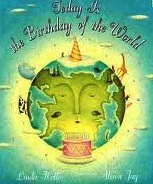
Today is the Birthday of the World, by Linda Keller. This book was also mentioned earlier in Elul Tools. A nice perspective this book offers is one similiar to the Zusia story above. We all essentially have our own unique gifts to offer the world. We are here to be ourselves, completely. Our life's work is to explore, enhance, and offer our authentic "me-ness" to others. This is the best birthday present we can give to the world, to God.
If you haven’t already, get into the festive nature of the Holiday by baking a honey cake or round challah. These are excellent projects to do with kids.
Keep eating your apples and honey! Wish each other a “Sweet New Year!”
Regrets flow seaward. As living waters clear my soul, I begin anew.
23 Elul—Tashlich: Casting Off What We Don’t Want
As we approach Rosh Hashanah, it helps to envision the coming year as a journey. All great voyages require some planning and forethought, including what to bring. In terms of our lives, which things (behaviors, attitudes, ideas, perspectives) do we want with us in the New Year? What should be on our checklist? Right alongside what TO bring is considering what NOT to bring. What could weigh us down? What might create problems? What pesky habits, harmful behaviors, troublesome experiences from this past year should we leave behind? Which mistakes and transgressions got us off track? How can we “unpack” them and make sure they don’t accompany us on the trip?
Wouldn’t it be nice to bundle up all our transgressions, all those ways we missed the mark last year, and just leave them behind? Wouldn't it also be great to leave behind all the challenges and anxiety we have experienced since the secular year, 2021 began. Fortunately Judaism provides us with precisely this opportunity during Rosh Hashanah. The beautiful, ingenious process of letting go of unwanted “junk” from the past year is known asTashlich. Translated as “You will cast...” Tashlich is usually performed as a community in the afternoon on the first day of Rosh Hashanah. This ritual gives us the opportunity to physically cast off our “sins” by throwing bits of bread into a body of flowing water. At the root of our misdeeds are bad habits, harmful behaviors, intolerant attitudes. Tashlich allows us to toss all of that into the ocean, a river, a creek, any living body of water. We fill our pockets with small pieces of bread. One by one we start letting all the struggles, the mistakes, the hurts, the challenges of our past year, drop into the flowing waters.
Our Sages teach us that the water must be alive and moving. This provides us with the cleansing transformation we are seeking. Recall that water in Judaism is often referred to as Mayiim Chayiim, which means living or life giving waters. The flowing currents take away our sins, which are then processed and transformed by the inherent purifying properties of flowing water. Tashlich allows us to empty ourselves of unwanted behaviors. Additionally, the process of doing this into a body of cleansing water, creates space for new life and growth within us. Tashlich is a powerful exercise because we are DOING something. So much of our preparation during Elul is internal and involves THINKING. At last we can take all our soul searching, our deep thoughts about who we have been in the past year, and turn it into a tangible action. It may seem that this is only a symbolic act. Yet when our bodies, senses, thoughts, and feelings are engaged, subtle change occurs--something is integrated, deeply. Change is possible.
There is additional power and meaning if this ritual is done with a community. Again we see that “to err is human.” Everyone gets off track. Everyone has stuff they want to leave behind, to cast into the water. Tashlich is a concrete step toward getting ourselves back on track.
Today’s Elul Tool: Think about the sins/midsdeeds you would like to leave behind from the past year. What mistakes would you like to chuck into the sea? Which transgressions would you like to see flow away, downstream in the river? What callous behaviors would you like to wash away? What from this year would you like to rinse away? Naming all of this specifically, in preparation for casting them off, helps ensure they won't follow us into the new year. Make a check list of the things you DO NOT want to take with you as you journey forth into 5782 (the new Jewish year). This should be an actual list. No need for explanations or rationalizations. Just a simple list. Keep this list handy. If you either attend a Tashlich service on Rosh Hashanah, or find a place to do this ritual privately, it’s nice to prepare yourself ahead of time. That way you can cast concrete, specific sins and transgressions, rather than general crumbs of regret into the water. Note:Tashlich is pronounced Ta-shleech, with the guttural, throat sound at the end. This sound does not exist in English but is the same sound as in Bach (the composer).
Psalm 27
It is customary to read Psalm 27 twice daily during Elul.
Here is an online version of Psalm 27 for easy access.
For Families and Kids!
Junior Tool Box:
Discuss the concept of Tashlich with your children. Talk about how water has the ability to cleanse and purify our mistakes.
Consider taking your family to Tashlich services (usually the first day of Rosh Hashanah afternoon) OR make a plan to perform Tashlich as a family. Children REALLY like this process. It is a tangible way for them to be involved in the renewal this time of year offers. There are many other Tashlich related activities for children. These are nice activities to do in preparation for the actual ritual of Tashlich. One idea is to have each member of the family write down all the mistakes and misdeeds they have committed in the past year. Do this on one piece of white paper with WASHABLE markers. When the page is full place the paper in a tub or large bin of water. The words in marker will begin to run and blur. Explain that this is how Tashlich works. Water is cleansing. It has the power to wash away things that get in the way of us being better people.
There are two great books about Tashlich for children. See info below:
New Year at the Pier by April Halprin
For ages five and up
Tashlich at Turtle Rock by Susan Schnur and Anna Schnur-Fishman
We are what we eat... Apples dipped in honey makes the coming year sweet
22 Elul—Shanah Tovah, Have a Sweet One!
During the month of Elul, it is customary to get in touch with loved ones. While we have been reaching out to friends and family for the purpose of making amends, Elul is also a time to reconnect with those we lost touch with over the year. We extend New Year’s greetings and exchange highlights of the year. Many send Rosh Hashanah cards. Others call friends and relatives who live far away. And of course, we can connect virtually by way of Facetime, Skype, Zoom and more.The purpose is to connect, to share this holiday time together as a Jewish community.
A common greeting during the High Holidays is for a “Sweet New Year.” Ideally, our efforts to improve ourselves by soul searching and making amends have been deliberate and sincere. This indeed paves the way for a new, good, and very sweet year ahead. This has been an incredibly challenging year for the human family and for our planet. While it may sound trite to say we hope for a sweet new year, the sentiment is meant point us toward whatever sweetness means to each of us. Indeed we are in need of a sweetness that includes healing, transformation, and sustainability.
We set the tone for a sweet year with Jewish culinary traditions such as eating apples and honey, sweet round challah, and honey cake.
Tradition holds that the very first Rosh Hashanah card was sent by 14th century Rabbi Jacob Halevi. In it he wrote what is heard throughout this holiday season, May you be written and sealed for a good year! In Hebrew the words are, L’Shanah tovah tikateyvuh v’tichatemu.
The process of sending out Rosh Hashanah cards may sound overwhelming and tedious. Yet for many it is a holiday tradition that helps set the tone for a new year. In reaching out and sharing holiday greetings, you are expanding on the idea of Teshuvah, return. This is a new year for all of us and we share in the renewal this time offers.
Today’s Elul Tool: Extend a Rosh Hashanah greeting to at least one person you care about. If you have more time, make a list of several people you would like to make contact with in this way. Try one of the following ways to make a Rosh Hashanah connection with someone:
1. Buy a set of Rosh Hashanah cards from a synagogue gift shop, if they are open during this time. Even if you end up not sending any cards, you will support the synagogue with a donation! But try to send at least one card.
2. Send homemade Rosh Hashanah cards. This is more realistic if you have children and are looking for engaging holiday ideas to share with them.
3. Set aside the time for personal phone calls with friends or relatives you want to connect with. Make sure to extend a New Year’s greeting.
Or if Communicating Via the Computer Works Best for you consider... 1. Sending Rosh Hashanah e-cards. Try one of the links provided below:
2. Share Rosh Hashanah greetings and highlights of your year with friends and family through a group email. One blast and it’s off!
3. Make a quick Rosh Hashanah “video card” and post on You Tube. Send the link to friends and family. Again, one blast and it’s off! Additionally, start to offer any of the following greetings to your Jewish friends and family through the rest of the Holiday season: • Shanah Tovah or L’Shanah Tovah: A Good Year • Shanah Tovah U’metukah: A Good and Sweet Year • L’Shanah Tovah Tikateyvuh V’tichatemu: May You Be Written and Sealed For a Good Year NOTE: It is customary to send Rosh Hashanah cards and greetings all the way through Simchat Torah which this year ends on September 29. So if you want to get in touch with lots of people with cards or calls, don’t feel like there is an urgency to complete this before Rosh Hashanah.
Psalm 27
It is customary to read Psalm 27 twice daily during Elul.
Here is an online version of Psalm 27 for easy access.
For Families and Kids!
Junior Tool Box:
Discuss the importance of staying in touch with people. Rosh Hashanah gives us the opportunity to do that, even if only once a year!
Make home-made Rosh Hashanah cards and send out to family and friends. Teach your children the traditional Holiday greetings above. Practice and have fun with both the English and Hebrew versions!
Make apple prints, either for cards or holiday decorations. Cut an apple in half (try to have the cut as smooth and even as possible), dip in paint or press on a stamp pad, and apply to paper or card. Add leaves and a stem!
Make a snack of apples and honey.
Listen to “Apples Dipped in Honey” in the audiofile below.
As full moon wanes to dark orb, we join our kin world wide. Shanah Tovah!
21 Elul—Practical Tips for the Holidays
Rosh Hashanah is just around the corner. This special holiday begins at sundown, with the new moon of the Hebrew month of Tishrei, on Monday, September 6. Some of you may be going to services. Some of you may observe this time at home. Others who are new to experiencing the holidays, may not have a particular plan for observing and celebrating. Regardless of your level of observance and knowledge of the Jewish High Holy Days, what follows are some practical tips for thinking a little bit ahead and preparing for these special days.
Special Meal: For Erev Rosh Hashanah (remember that the Jewish day starts at sundown), many people celebrate with a festive meal including candle lighting for Yom Tov (literally translated as good day, meaning special holiday). Kiddush over wine and challah and a special blessing called the Shehecheyanu are also recited. Even if you will not be heading off to synagogue afterward, consider having a special meal and lighting candles specifically for the holiday. If you think you might host such a special evening, now is the time to think about the logistics!
Synagogue Services: Most synagogues hold services for Erev Rosh Hashanah (the evening service) as well as the following two days in the morning. Services are also held for Kol Nidre and Yom Kippur day. If you don’t belong to a synagogue, you can still attend services. This year, many synagogues are holding Zoom services. Because of this you can probably attend services anywhere around the world. Now is the time to find out where, when, and whether you have to be a member to sign on.
Special Foods:
Traditional holiday foods include round challahs (symbolizing the cyclical nature of things, wholeness etc), apples and honey, and sweet foods baked with honey, such as traditional honey cake. The honey and sweetness symbolize the hope for a sweet new year. Consider having some of these foods during the holiday. It sets the mood and joins you with millions of other Jews around the world who are participating in the same customs. How unifying! If you want to have round challahs for Rosh Hashanah, find a local bakery and see if you need to order one in advance. You can also bake your own! There is a great challah recipe at the end of today's post. Similarly, many bakeries and stores sell baked Rosh Hashanah honey treats. If you like to bake, there are dozens of honey cake recipes (either online or from your friends and family). However, if you would like to experience a really spectacular honey cake, check out the recipe at the end of today's post. Now is the time to plan ahead for preparing or purchasing these foods! Next trip to the store, stock up on apples and honey!
Special Clothes for Rosh Hashanah: Many like to take the opportunity to treat themselves to a new outfit for Rosh Hashanah. New year, new clothes! If you want to wear something new and fantastic to synagogue, or on Zoom, now is the time to get out to the store! Special Clothes for Yom Kippur: Yom Kippur falls ten days after Rosh Hashanah. It is traditional to wear all white (to symbolize purity) on Yom Kippur day. Additionally, many people do not wear leather of any kind (shoes included). If you want to observe these customs, now is the time to make sure you have white clothes and/or non leather shoes that fit and are comfortable. Don’t wait until the last minute and find you don’t have what you need. Fasting for Yom Kippur:There is a 25 hour fasting period during Yom Kippur (essentially sundown to slightly after sundown the following day). Many need to prepare themselves physically and emotionally for this process. If you drink caffeine, now is the time to start tapering back to avoid the headaches that occur when stopping abruptly. If you think giving up coffee will be too much of a stretch, do the rest of the fast. Don’t let this be a reason for not fasting. Maybe you can drink it without cream and sugar though or drink the least amount you can get by with?
Taking Time Off: Allow yourself time off from work (and your children from school) to honor these extremely important holidays. Even if you do not attend services, make a commitment to take some time off for your own personal observances, mediations, prayers, contemplative walks etc...Join with the millions of Jews around the globe who are doing the same. It’s a powerful idea to consider that the Jewish community as a whole, in cities all over the world, are honoring their heritage and their spirituality in this ancient practice.
Today’s Elul Tool: Take some time to think about how you will observe Rosh Hashanah and Yom Kippur this year. Wherever you are on the path of observance, knowledge, comfort etc., pick a couple of concrete ways to honor your tradition, to take care of your soul. Can you increase your observance from whatever you did last year? Perhaps you want to host a dinner? Maybe you want to bake a honey cake or round challah? Can you commit to fasting, giving up coffee? Even if you are nervous and unsure about attending services, consider all the hard work you have done preparing for Elul. It is extremely moving, powerful, and transformative to go through this process as a community in a synagogue setting. Even if you feel unfamiliar with synagogue practice and rituals, perhaps this is the year to “check it out?” Pick something from these ideas that will stretch you, but is also realistic and doable for your life. The main point is to continue learning and growing each year!
Psalm 27
It is customary to read Psalm 27 twice daily during Elul.
Here is an online version of Psalm 27 for easy access.
For Families and Kids!
Junior Tool Box: Many synagogues offer children’s services. This year this will most likely be happening virutally, on Zoom. Contact your local synagogue for details. It’s always a special treat to hear the shofar blowing at High Holiday services. Children really enjoy this part of the service. Discuss the different holiday customs from above. Do any interest your child more than others?
Keep in mind that while children usually do not fast on Yom Kippur, some families try to keep the meals basic and simple, forgoing treats like dessert and non-nutritious snacks. Food only for the sake of “fuel” is the way to treat the idea for children. Remind them that this helps keep us focused on ourselves and on God. When we are busy enjoying food, we are distracted for the serious reflection Yom Kippur provides.
Continue to eat apples and honey as a treat or a snack! Bake a honey cake (see recipe below) or other apple or honey related treat. Bake a round challah (see recipe below). Go on a shopping trip for a New Year’s outfit. Discuss the idea and importance of wearing white on Yom Kippur. Talk about how it is like making yourself clean and clear. Like a blank slate for the New Year. Look through your children’s clothes and pick out something white for them to wear on Yom Kippur day.
RECIPES
1. Here is the link to a FABULOUS Rosh Hashanah Honey Cake, courtesy of the Smitten Kitchen blog. You won't be disappointed!
The following is my husband's challah recipe. Instructions for making it round are at the end. Enjoy!
Chaim's Challah, A Pretty Good Challah
Makes Two Loaves
Ingredients:
2 packages or 1 1/2 tablespoons active dry yeast
1 cups warm water (110 degrees to 115 degrees)
1/2 cup vegetable oil
1/3 cup sugar
1+ tablespoons salt
5 eggs (4 for the Challah dough, 1 for the final egg wash)
6 cups all-purpose flour
1 teaspoon cold water (for the egg wash)
Directions:
In a mixing bowl, dissolve yeast in warm water. Add the oil, sugar, salt, 4 eggs and beat until smooth. Stir in flour to form a firm dough. Turn onto a floured surface; knead intently (or diligently) until smooth and elastic, about 8 - 10 minutes. Place in a greased bowl, turning once to grease top. Cover and let rise in a warm place until doubled, about 1 hour.
Punch dough down. Turn onto a lightly floured surface; divide in half. Divide each portion into thirds. Shape each piece into a 15-in. rope, braid and pinch ends to seal and tuck under. Place on a greased baking sheet or preferably a baking sheet with parchment paper. Repeat with remaining dough. Cover and let rise until doubled, about 1 hour.
To make a round challah, take one long rope and coil it. You can also take two ropes twisted together or three ropes braided and coil them. (For videos of several different methods, go to Youtube and type in “Round Challah”).
Beat cold water and remaining egg; brush over braids. Bake at 350 degrees F for 17 minutes or until golden brown.
Remove to wire racks to cool.
Background:
Today "challah" refers to the bread eaten on Shabbat. Originally "challah" referred to the small piece of dough that was set aside for the kohen (priest) when making bread. Today we bless, separate and burn a small piece of dough when making bread in remembrance of the portion given to God. This ritual reminds us that sustenance ultimately comes from God and transforms baking bread into a spiritual act.
Make dough for the challah. When it is ready to be shaped into loaves, say the following blessing: Baruch Ata A-Do-Nay Elo-haynu Melech HaOlam Asher Kidishanu B'Mitzvotav V'Tziyvanu L'Hafrish Challah. (Blessed are You, Lord our G-d, King of the Universe, Who has sanctified us with His commandments and commanded us to separate Challah). Immediately after saying the blessing, pinch off a piece of dough, approximately the size of an olive or one ounce, and say: harai zeh challah (this is challah). Then wrap the separated piece of dough in foil and burn it in the oven. The separated piece of challah should be burned so that it is no longer usable.